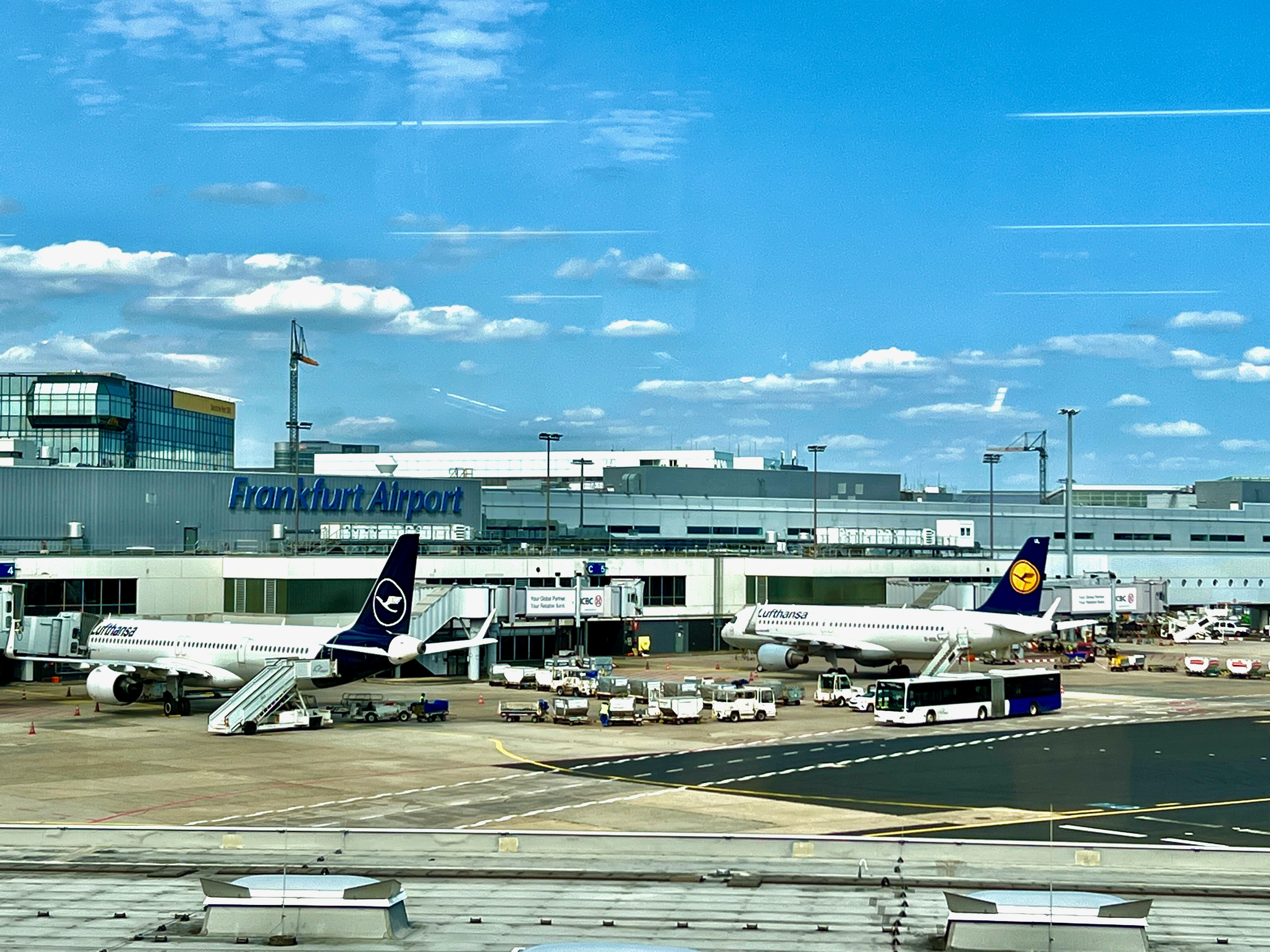
Technology is “no longer a luxury, but the very pulse of global aviation.” Many lists have ranked airports by wait times, missing luggage, and even wellness experiences. Still, a new one evaluates the world’s airports by how they incorporate artificial intelligence, biometrics, digitalization, automation, sustainability-driven smart systems and more as core operational infrastructure – transforming and improving your journeys.
The 50 Best Airports in the World for 2026 from travel trade publication Travel and Tour World traces how aviation hubs are “meeting the high-performance demands” of today’s travelers, from digital nomads to occasional travelers who expect all the efficiencies of Gen Z technology.
"Crucially, sustainability is no longer a parallel initiative but a core outcome of these smart designs,” the study’s authors say, meaning we can have our cake and eat it too, when it comes to traveling more smoothly and reducing the impact on the planet.
TTW used the experiences of 15 million users to define the new gold standard for technology in airports.
So, Where are the Top Global Smart Airports?
These airports have achieved the highest rankings for embedding artificial intelligence, biometrics, automation, digital twins, and real-time data intelligence across passenger journeys, airside and landside operations, and long-term infrastructure planning.
Four North American airports made the global top 10, and 14 of the 50-airport ranking.

Do your flights into and out of these airports match these findings?
- Dubai International (DXB) Middle East
- Singapore Changi (SIN) Asia-Pacific
- San Francisco International (SFO) North America
- Hartsfield-Jackson Atlanta International (ATL) North America
- London Heathrow (LHR) Europe
- Vancouver International (YVR) North America
- Istanbul Airport (IST) Europe / Eurasia
- Toronto Pearson International (YYZ) North America
- Doha Hamad International (DOH) Middle East
- Seoul Incheon (ICN) Asia-Pacific
- Tokyo Haneda (HND) Asia-Pacific
- Los Angeles International (LAX) North America
- Paris Charles de Gaulle (CDG) Europe
- Cape Town International (CPT) Africa
- Bengaluru Kempegowda International (BLR) Asia-Pacific
- Frankfurt Airport (FRA) Europe
- Orlando International (MCO) North America
- Dallas Fort Worth (DFW) North America
- Bangkok Suvarnabhumi (BKK) Asia-Pacific
- Tokyo Narita (NRT) Asia-Pacific
- New York JFK (JFK) North America
- Berlin Brandenburg (BER) Europe
- Munich Airport (MUC) Europe
- Miami International (MIA) North America
- Shanghai Hongqiao (SHA) Asia-Pacific
- Denver International (DEN) North America
- Seattle-Tacoma (SEA) North America
- Shenzhen Bao'an (SZX) Asia-Pacific
- Brussels Airport (BRU) Europe
- Hong Kong International (HKG) Asia-Pacific
- Rome Fiumicino (FCO) Europe
- Amsterdam Schiphol (AMS) Europe
- Helsinki-Vantaa (HEL) Europe
- Abu Dhabi Zayed International (AUH) Middle East
- Sydney Kingsford Smith (SYD) Australia / Oceania
- Zurich Airport (ZRH) Europe
- Madrid Barajas (MAD) Europe
- Vienna International (VIE) Europe
- Chicago O'Hare (ORD) North America
- Oslo Gardermoen (OSL) Europe
- Barcelona El Prat (BCN) Europe
- Copenhagen Airport (CPH) Europe
- San Jose Mineta (SJC) North America
- Washington Reagan National (DCA) North America
- Milan Malpensa (MXP) Europe
- Riyadh King Khalid (RUH) Middle East
- Kuala Lumpur International (KUL) Asia-Pacific
- Lisbon Humberto Delgado (LIS) Europe
- Jakarta Soekarno-Hatta (CGK) Asia-Pacific
- Houston George Bush Intercontinental (IAH) North America
According to the report, these airports represent the most advanced, end-to-end smart airport ecosystems in operation today.
From biometric-enabled passenger journeys and AI-driven air traffic coordination to digital twins and autonomous systems, the airports featured in this year's list are shaping the future of your flying experiences around the world through capacity optimization, passenger satisfaction, and environmental performance.
START YOUR TRIP!
Images: FRA and YYZ; courtesy of Lynn Elmhirst, travel journalist and expert
All rights reserved. You are welcome to share this material from this page, but it may not be copied, re-published, broadcast, rewritten or redistributed.